When choosing overseas hosting or acceleration nodes, many people ask, "Can cheap Hong Kong servers work?" This guide centers on performance and safety, providing systematic assessment dimensions and actionable recommendations to help you strike a balance between cost and quality.
Answering "Can cheap Hong Kong servers be used?" depends on the usage scenario. Cheap solutions are often suitable for testing, low-traffic sites, or applications that tolerate latency, but for high-concurrency, financial, or businesses with strict availability requirements, low price alone is insufficient to meet stability and security needs.
The geographical advantage of the Hong Kong node lies in its low to medium latency connecting Chinese mainland and international internet, but actual experience is affected by bandwidth caps, outbound congestion, and carrier links. During evaluation, attention should be paid to the type of bandwidth (shared or dedicated) and peak bandwidth guarantees.
Cheap solutions usually use older or oversold physical resources. Checking CPU, memory, SSD types, and IOPS metrics to understand whether there are overallocations or neighbor noise issues is a key step in assessing performance stability.
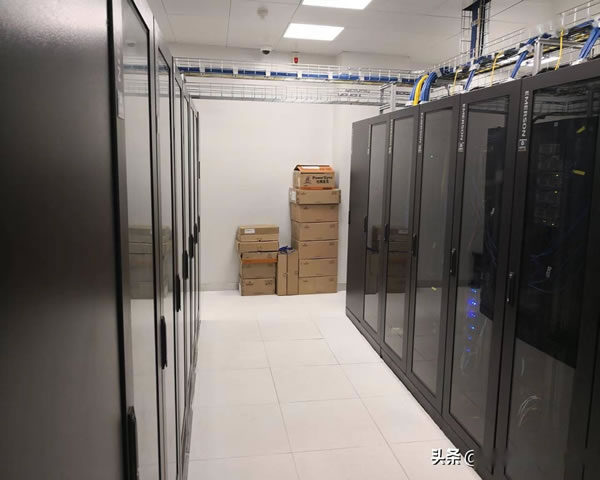
Security is not just about price; the key lies in whether the vendor provides basic protections and optional features, such as DDoS mitigation, network ACL, host firewalls, and timely patch management. Cheaper solutions lacking these capabilities require additional investment in operations and maintenance.
Hong Kong's legal and regulatory environment has unique requirements for data storage and cross-border transfers. When assessing whether sensitive data is involved or subject to industry compliance constraints, priority should be given to verifying the service provider's compliance certificates and data processing policies to avoid legal risks.
Service reliability depends not only on hardware but also on operations and support. Cheap servers often underperform support response, fault recovery, and SLA commitments. Confirming whether there is a 7x24 response, spare parts policy, and transparent fault records are necessary steps.
Even if you choose a cheap Hong Kong server, you should deploy monitoring, automated alerts, and regular backup mechanisms. Combining multi-availability zones or hybrid cloud strategies can improve availability and data security while keeping costs under controllable conditions.
Comparing cost-effectiveness should be based on quantifiable metrics: network latency, throughput, IOPS, error rate, SLA, and support timeliness. It is recommended to verify supplier commitments through stress testing, long-term flow monitoring, and simulated fault drills.
Before deciding on migration, conduct short-term trials and grayscale releases, gradually migrating traffic and observing performance and security incidents. Preparing rollback plans, data synchronization schemes, and clearly defining fault handling processes can significantly reduce the risk of switching.
If your application is sensitive to latency, has a limited budget, and can accept a certain amount of operational investment, the cheap Hong Kong server can serve as a transitional or auxiliary node. However, for critical business, financial, or high-compliance scenarios, priority should be given to solutions with higher SLAs and security capabilities.
Returning to the question "Can cheap Hong Kong servers be used?": the answer depends on business needs and risk tolerance. By clarifying performance metrics, verifying safety measures, and conducting thorough testing, you can make wiser choices between cost and risk. Recommendation: Trial and validate key metrics first, with monitoring and backup, and adopt a hybrid architecture to share risk if necessary.
- Latest articles
- Korean CN2 Network Cloud Service Product Selection Guide Performance, Security, And Scalability Evaluation
- Developer Manual: Best Practices For Network And Security In Configuring Linode Japanese Native IP
- Where Can I Buy A Vietnam Cloud Server? Hands-on Tutorial From Registration To Activation
- Free Traffic Test: Comparing And Analyzing The Actual Performance Of Free Servers In Korea
- Cache And Compression Optimization: Front-end And Back-end Acceleration Strategies For Slow Access Speeds In The US VPS
- The Latest Hands-on Guide Teaches You How To Deploy Conoha Singapore CN2 To Enhance Your Overseas Travel Experience
- Is It Possible To Use Cheap Hong Kong Servers? A Guide To Evaluating Both Performance And Security
- Deployment Process: Smooth Migration Steps From Testing To Production Of The Vietnam Cloud Server Database
- Practical Guide To Migrating German VPS Managed Operations: Seamlessly Implementing Domain Names And Databases
- The Impact Of Renting Hong Kong Cloud Servers On SME Operating Costs And Ways To Save Money
- Popular tags
-

How To Use The Hong Kong Site Group Interface To Achieve Batch Site Management And Automated Publishing
this article introduces how to use the hong kong site group interface to achieve batch site management and automated release, covering practical suggestions such as interface docking, architecture design, scheduling strategies, seo collaboration, security and operation and maintenance, and is suitable for reference by technology and product teams. -

How To Optimize International Access Speed Through Chongqing And Hong Kong Server Hosting Companies
This article explains how to optimize international access speeds through server hosting companies in Chongqing and Hong Kong. It provides practical advice on node advantages, bandwidth and connection selection, CDN and caching strategies, server configuration, and operational security, to help improve the browsing experience for overseas users and enhance SEO performance. -

Things To Note When Buying Cheap Hong Kong Native Ip
this article introduces what you need to pay attention to when buying cheap hong kong native ip to help users choose the appropriate ip service.